Sunny Night Script Font for Handmade Creators
As someone who designs printable wedding suites, hand-labels small-batch candles, and cuts vinyl for boutique gift tags, I’ve learned that the right script font isn’t just about beauty—it’s about trust. When a customer sees Sunny Night on a thank-you card tucked into their order, or on a rustic wooden sign hanging in a local shop, they don’t just see letters—they feel intention, care, and quiet elegance. That’s why Sunny Night has become my go-to script font for physical products that need to stand out without shouting.
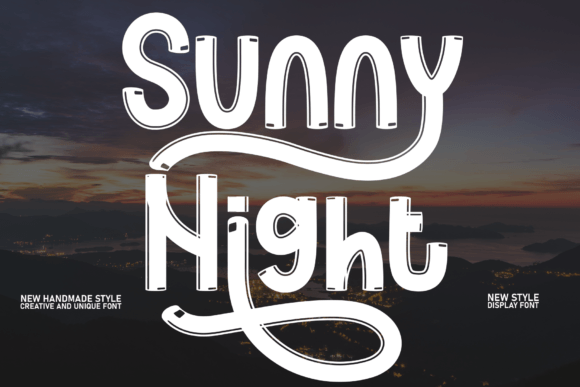
Sunny Night is a refined, flowing script—neither overly ornate nor too minimal. Its strokes have gentle contrast and soft terminals, giving it warmth and movement without sacrificing clarity. It reads like a confident, practiced hand—not rushed, not stiff—and carries a subtle modernity that keeps it fresh across seasons and styles. Whether you're designing a farmhouse welcome board for a bridal shower or printing delicate foil-stamped labels for artisanal honey, Sunny Night delivers consistent charm at every size.
Where Sunny Night Shines in Real Craft Projects
I use Sunny Night most often where legibility and emotional resonance intersect: greeting cards (especially birthday and sympathy), wedding stationery (welcome signs, menu prints, envelope addressing), and product packaging that tells a story before it’s opened. Its rhythm works beautifully for short phrases—“Hand-poured,” “Made with Love,” “Est. 2022”—and holds up well even at 14pt on kraft paper tags or 8pt on sticker sheets cut for Cricut or Silhouette machines.
For printable creators, Sunny Night excels in wall art collections—think minimalist botanical quotes or affirmations designed for digital download. Its graceful curves translate cleanly to PDF previews and print-ready files, and it scales predictably from 5x7” framed prints to large-format canvas mockups. On planner pages or habit trackers, I use it sparingly for headers only; its expressive nature makes it perfect for titles (“Monthly Intentions,” “Gratitude Log”), but not for body text.
When designing seasonal merchandise—like holiday mugs, linen tea towels, or cotton tote bags—I pair Sunny Night with a clean sans serif (think Montserrat or Poppins) for balance. The contrast lets the script breathe while keeping information scannable. For example, a mug might read “Cozy Nights” in Sunny Night above “hand-thrown • small batch • made in Maine” in a crisp, neutral typeface. That pairing builds brand consistency without sacrificing personality.
Practical Tips for Cutting, Printing & Selling
If you’re cutting Sunny Night with a Cricut or Silhouette, test at your intended size first—especially for swash capitals or extended ligatures. While the font includes elegant alternates and optional swashes (great for logos or monograms), those flourishes can get fragile below 20pt on thin vinyl or delicate washi tape. For small stickers or jar labels under 1 inch wide, stick to the standard uppercase or lowercase set. They retain character while staying robust through cutting and weeding.
On printed cards and invitations, Sunny Night performs best on smooth or lightly textured papers—not ultra-rough watercolor stock, where fine hairlines may break up. I’ve found it pairs especially well with letterpress or foil stamping: the slight variation in pressure enhances its organic flow rather than fighting it.
For digital downloads sold on Etsy or Gumroad, Sunny Night adds instant perceived value. Customers associate premium script fonts like this one with thoughtful design—and they’ll pay more for a printable bundle that feels cohesive and intentional. Just remember: always verify the license covers commercial use for physical products, templates, SVG files, and digital assets. Sunny Night, as part of the Script Amp collection, includes full commercial rights—so you can use it on client work, sell branded stickers, or embed it in Canva templates without hesitation.
Smart Pairings & Design Confidence
Script fonts live and die by their companions. Sunny Night thrives beside structured, no-nonsense typefaces—especially geometric sans serifs (like Avenir Next or Inter) or warm, low-contrast serifs (such as Lora or Cormorant Garamond). Avoid pairing it with other scripts or overly decorative fonts; that creates visual competition instead of harmony.
Here’s what works in practice:
- Candle labels: Sunny Night for the scent name (“Lavender & Rain”) + Montserrat Light for net weight and ingredients
- Wedding welcome boards: Sunny Night for “Welcome to Our Day” + Playfair Display Bold for couple names
- Boutique clothing tags: Sunny Night for brand name (“Haven & Thread”) + Open Sans for care instructions
- Holiday packaging: Sunny Night for “Season’s Greetings” + Raleway for “Hand-packaged with care”
The font comes in OTF and TTF formats—fully compatible with Adobe Creative Suite, Affinity apps, Cricut Design Space, and Silhouette Studio. If you’re building SVG bundles, test how each glyph converts in your vector editor; Sunny Night’s clean outlines handle conversion reliably, and its built-in ligatures (like “fi,” “fl,” “ct”) activate automatically in apps that support OpenType features.
And yes—it supports multilingual characters, including extended Latin (accents, diacritics, and European language support), which matters if you design bilingual baby announcements or serve international markets through your shop.
At its core, Sunny Night isn’t just another script font. It’s a quiet confidence-builder—for your designs, your brand voice, and the handmade experience you offer customers. It says “I paid attention” without saying a word. And in a world flooded with generic templates and AI-generated graphics, that kind of authenticity is your strongest design asset.